

Special Nathaniel Report marks 10 years since Laudato Si’
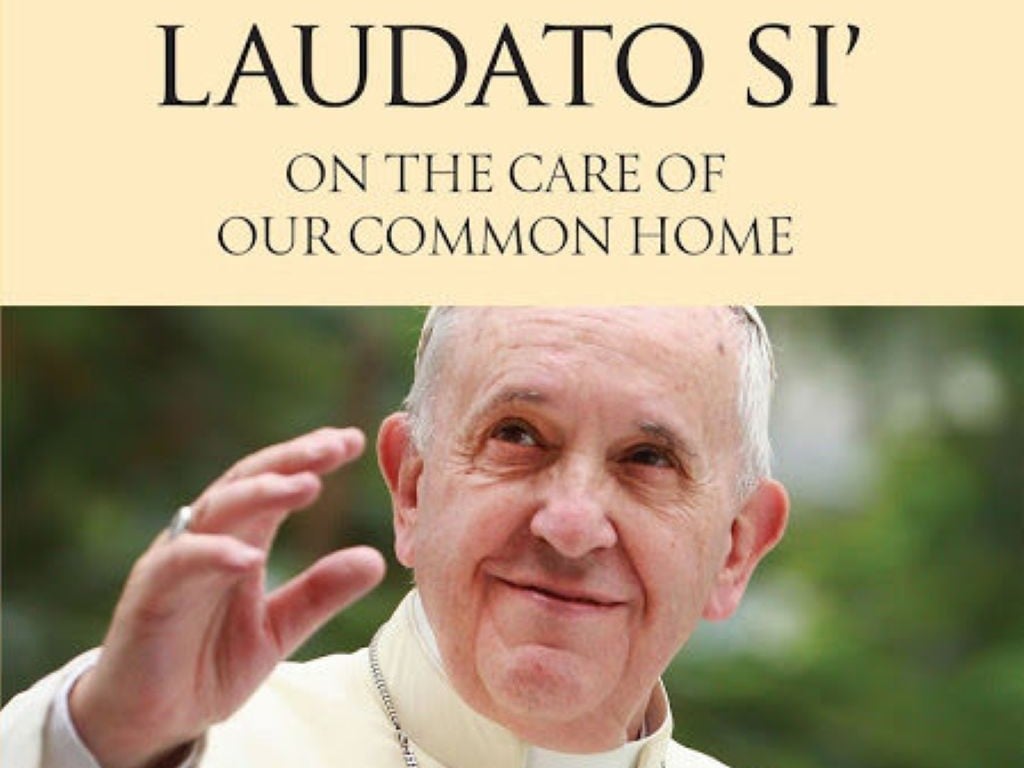
(Jesuit European Social Centre)
In an editorial for the magazine, Dr Greg Marcar from Te Kupenga – The Nathaniel Centre noted the inadequacy of theologies that fail to place humanity in its proper context in creation.
Dr Marcar wrote that Pope Francis’ encyclical, together with the wider teachings of the Church, “continues to provide us with an ecology and anthropology that can itself only be understood with reference to a theology of God’s love in creation”.
Church teaching, and the encyclical in particular, oppose theologies that would allow humanity to exploit and damage creation, he explained.
In Laudato Si’, Pope Francis points towards the “technocratic paradigm” of modern society, under which human beings deny their interconnectedness with other creatures and shared vulnerabilities, with the result that they then become “enthralled” with the mistaken possibility of “limitless mastery over everything”.
Under the spell of this enthrallment, the temptation arises for people to see humanity’s place as one where, to cite Pope Benedict XVI, “we ourselves have the final word”, “everything is simply our property” and “we use it for ourselves alone” – as quoted in Laudato Si’.
“As Francis perceives, the inadequacy of such anthropologies is inextricably connected to our failure to understand our true place within creation,” Dr Marcar wrote.
The editorial noted that, for Laudato Si’, God the Father, in loving tenderness, “gives [every creature] its place in the world”.
God’s love constitutes the “fundamental moving force in all created things”. Therefore, Pope Francis explained that, as part of the universe, called into being by one Father, all are “linked by unseen bonds and together form a kind of universal family, a sublime communion which fills us with a sacred, affectionate and humble respect”.
While others may contend that humanity’s connectedness to the rest of the world results from loveless physical processes, Dr Marcar wrote, Pope Francis cites his previous apostolic exhortation, Evangelii Gaudium (2013), to stress that God, through his creative love, “has joined us so closely to the world that we can feel the desertification of the soil almost as a physical ailment, and the extinction of a species as a painful disfigurement”.
In his sequel to Laudato Si’, Laudate Deum (2023), Pope Francis recalls this description of humanity’s place-in-relation to other creatures and insists that humans’ “anthropocentrism” must therefore be “situated” within the wider “family” of God’s creation.
As creatures made in the image of God (imago Dei), human beings are called to be instruments of God’s will; that is, to be “channels” of God’s love towards themselves and the rest of his creation, Dr Marcar noted, referencing a prayer of St Francis of Assisi.
FULL STORY
The Nathaniel Report No 76 August 2025 (The Nathaniel Report)

Ad

Ad
The latest from
CathNews


Newsletter Signup
Receive CathNews New Zealand updates in your email every Tuesday and Friday