

NZ bishop: Leo places AI at service of common good
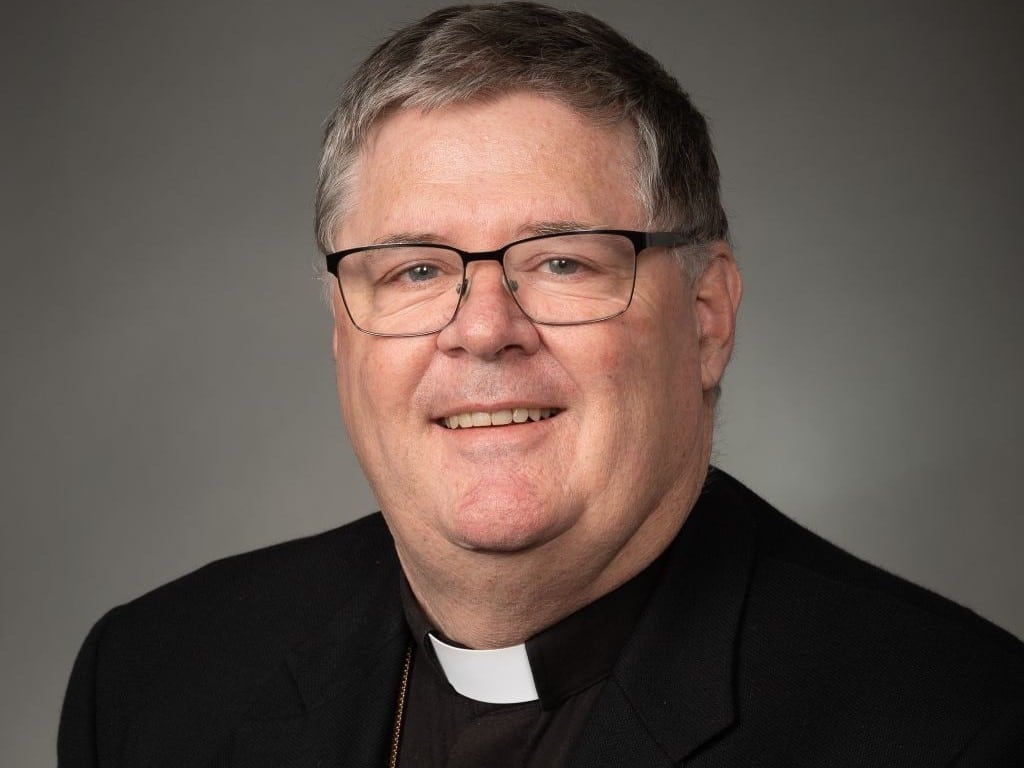
Bishop Richard Laurenson (NZCBC)
Pope Leo’s first encyclical was published on Monday, taking the subtitle “on safeguarding the human person in the time of artificial intelligence”.
Hamilton Bishop Richard Laurenson said while there has been an explosion in the availability of various forms of AI in recent years, the trajectory to today was set decades ago.
Bishop Laurenson said artificial intelligence’s impact on humanity has been pondered since at least 1949, and the place of computers in society has been critiqued in literature and films, including 1984, 2001: A Space Odyssey and The Terminator.
“Now, in his first worldwide letter, Pope Leo offers us a vision by which we can navigate this new thing – a thing that promises a revolution – without fear and with hope,” he explained.
Bishop Laurenson said “this new technology we are calling AI” offers great opportunities, but also some caution.
“All technology comes with risks and gifts,” he said. “It is up to the human community to mitigate AI risks, and focus the gifts for the good of all people.
“Because of our fallen human nature, the negative side of new tech can be exploited quickly with damaging results. This letter from Pope Leo provides us with a set of criteria where we can focus this new tech for the common good. This is true for individuals, families, communities and countries.”
Julianne Hickey, an advisor to the Archdiocese of Wellington who participated in a major AI conference at the Pontifical Gregorian University in Rome last year, said Pope Leo posed important questions at that event.
“Pope Leo addressed our gathering and asked us to consider who we are becoming through the technologies we build,” she said.
“As a mother who is involved with AI across several sectors of our economy, I am thinking deeply on how we design and create – and what it will mean for future generations.”
Mrs Hickey continued: “In this encyclical, Pope Leo calls on us to imagine, to build a world where all people can thrive. That challenges me and those working ethically in the field of AI to be intentional now, so that future generations flourish. We all have a part to play in building the future we want.”
James Bergin, who has worked as a technology leader for more than two decades and has advised the Church in a range of digital ministries, said the Church has led many ethical conversations about AI in recent years.
“Back in 2020, the Rome Call for AI ethics was created at the Vatican, with signatories from some of the world’s largest tech companies, urging moral decision-making at a time when such morals can be elusive,” Mr Bergin said.
“Many popes have spoken about the opportunities and risks of technology, and Francis and Leo have made AI a significant focus in their papacies.
“In doing so, they remind Catholics and the world that responsible use of technology that places humans at the heart is a great gift. But they are unafraid when it comes to naming the harms that come when technology is devoid of morality.
“Pope Leo in Magnifica Humanitas carefully exposes the duality of current technology and urges us to avoid simply sleepwalking into the future,” Mr Bergin said.

Ad

Ad
The latest from
CathNews

Newsletter Signup
Receive CathNews New Zealand updates in your email every Tuesday and Friday