

Conference refutes claim that science, faith are opposed
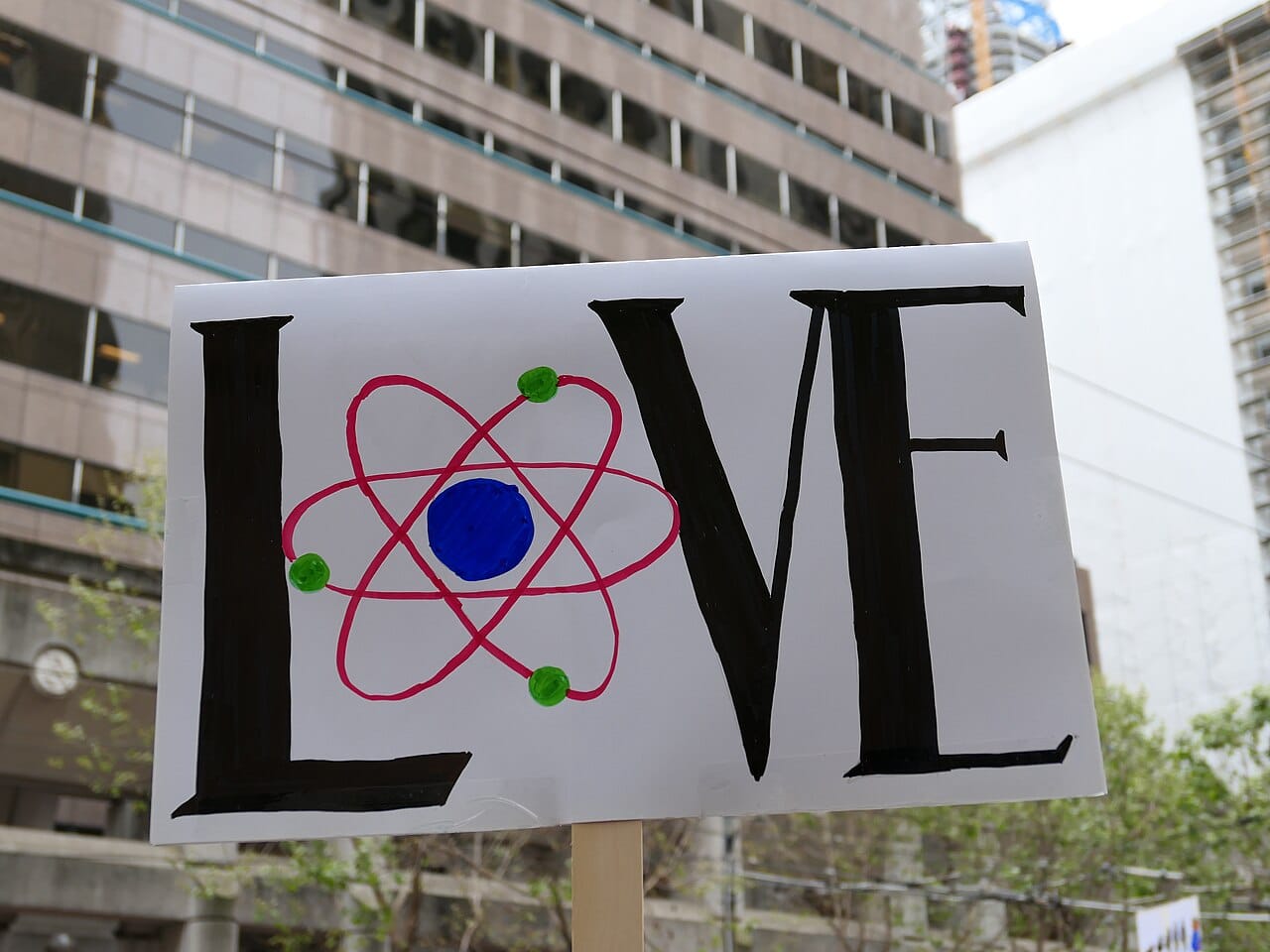
A sign at a 2017 march for science (Wikimedia Commons)
About 130 scientists gathered for the ninth annual Society of Catholic Scientists conference held from June 5-7 at Mundelein Seminary in the US state of Illinois.
Talks touched on the deeply Catholic history of science, the moral dilemma of identical twins, how science and faith are one in their pursuit of truth, how artificial intelligence fits into the grand scheme of things and how key mathematical discoveries reveal God’s beauty and infinity.
The Society of Catholic Scientists (SCS) exists to correct the false characterisation of faith and science as opposed.
Robert Scherrer, a physics professor at Vanderbilt University, said: “Thereʼs this myth that science and religion are opposed to each other. A lot of atheists have a very simplistic view of religion: The religion they donʼt believe in is not the religion I do believe in. But young people see this myth and think, ‘I have to pick which team Iʼm going to be on’.”
SCS members have initiated a number of projects to share more broadly the compatibility of faith and science, from a Faith, Science and Reason high school textbook written by Chris Baglow, who directs the Science and Religion Initiative of the McGrath Institute for Church Life at the University of Notre Dame, to a new training offering this year that prepares scientists to give lectures on the unity of faith and science.
Ignasi Rosell, a particle physicist and one of several visitors from the society’s Spain chapter, explained how scientists can understand their work in light of St John Henry Newman’s vision of the university, saying: “Truth is one. Newman was not defending theology against science: He was defending the unity of knowledge. The university remains the privileged place where that unity is sought.”
At the conference, Maureen Condic, neurobiology professor and bioethicist at The Catholic University of America, presented her solution to the “twin problem”. Identical twins are said to pose a moral dilemma: If one embryo can divide into two distinct persons, how does that square with the belief that personhood begins at conception?
Professor Condic drew from the newest research in molecular developmental biology and the ancient wisdom of Aristotelian-Thomistic metaphysics to present a sophisticated answer that affirms the dignity of human life at all stages, arguing that the splitting of an embryo to become identical twins is an act of biological regeneration, comparable to asexual reproduction.
Thus, an embryo becoming identical twins is not the division of one human person but the spawning of a second individual from a first.
FULL STORY
Catholic scientists meet to discuss identical twins, AI, and the unity of truth (By Theresa Civantos Barber/EWTN News)

Ad

Ad
The latest from
CathNews

Newsletter Signup
Receive CathNews New Zealand updates in your email every Tuesday and Friday