

Holy See looks to treaty on crimes against humanity
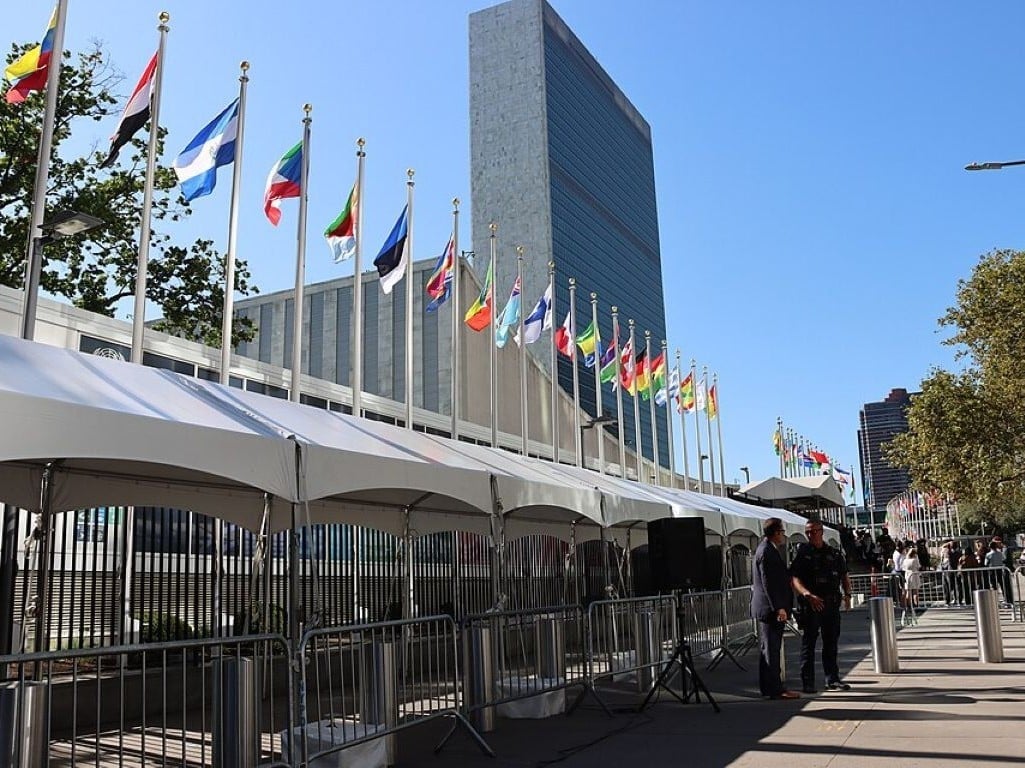
United Nations Secretariat Building in New York (Diplomatic Security Service/Wikimedia Commons)
In a statement to a United Nations general assembly committee this month, the Holy See stressed the urgency of the issue, noting that children, women and members of ethnic and religious minorities, including many Christians, continue to suffer persecution, enslavement, forced displacement and death.
The Holy See noted that Article 7 of the Rome Statute, which reflects customary international law, remains the appropriate reference point for definitions that could be used in a future treaty.
“Modifying them before State practice and opinio iuris have developed would hinder consensus and weaken the instrument. For this reason, the Holy See supports retaining the definition of gender set out in Article 7(3) of the Rome Statute, which refers to the two sexes, male and female, in the context of society, as well as the established definition of forced pregnancy. This language excludes no one from protection: every human being must be safeguarded from persecution and violence.”
The statement stressed that cooperation between states “must include adequate safeguards. No person should be extradited or surrendered to a jurisdiction where there are substantial grounds for believing that he or she would be subjected to torture or other cruel, inhuman or degrading treatment, or to the death penalty”.
Victims must stand at the centre of a future convention on crimes against humanity, the Holy See added. “Their suffering demands justice and ongoing protection.”
“Justice must respect the dignity of the accused,” the statement added. “Due process, the presumption of innocence, the impartiality of judges, the effective rights of the defence and the reasonable duration of proceedings are not concessions to perpetrators, but conditions of the law’s legitimacy. Penalties should be proportionate and open to reconciliation because persons ‘can never be reduced to the crimes they have committed’.”
“Crimes against humanity rarely occur without warning,” the statement noted in conclusion.
“They are facilitated by impunity, by the dehumanisation of entire groups and by the gradual erosion of respect for the law.”
FULL STORY
Statement of the Holy See at the Sixth Committee of the 81st session of the General Assembly – Item 79: Crimes against humanity (Holy See Mission to United Nations)

Ad

Ad
The latest from
CathNews

Newsletter Signup
Receive CathNews New Zealand updates in your email every Tuesday and Friday