

Theologian: Church of Council of Nicaea is today’s Church
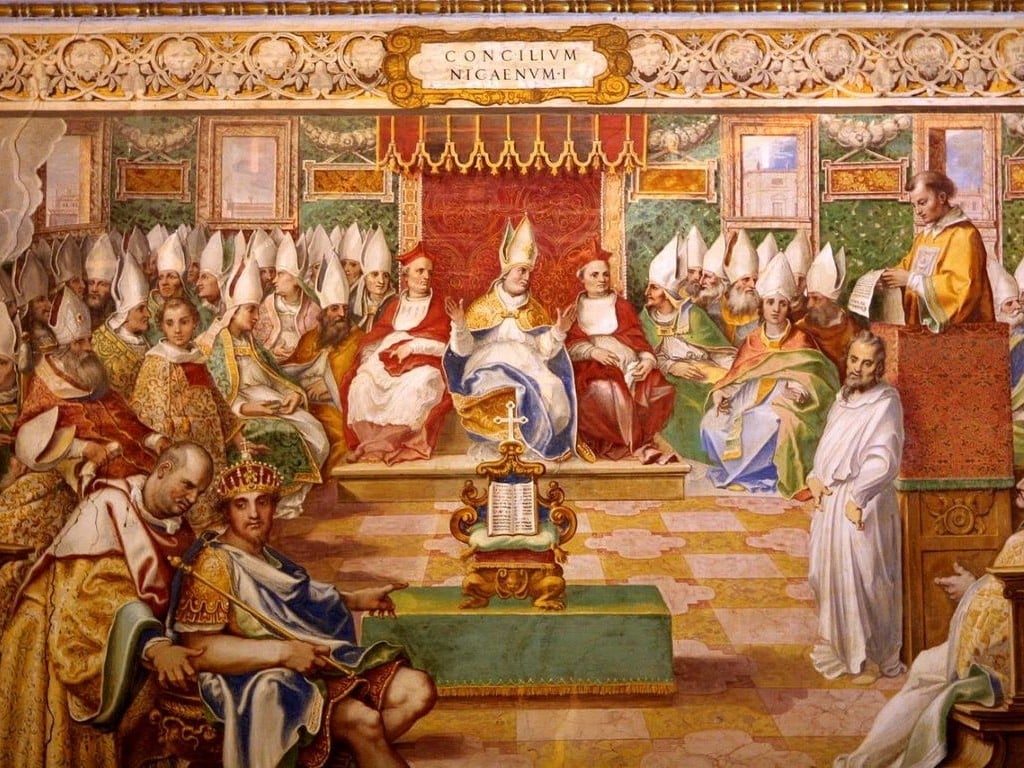
Giovanni Guerra (1544-1618), Cesare Nebbia (1534-1614) Council of Nicaea 325. Fresco in Salone Sistino, Vatican (Wikimedia Commons)
The anniversary of the Council held in 325 is being commemorated on September 12 and 13 as part of the Church’s Holy Year of Jubilee. Fr Meryvn Duffy SM, Te Kupenga Catholic Theological College Level 7 Dean, reflected on the Council ahead of the jubilee event.
Fr Duffy noted that, “from its earliest days, the Catholic Church has used councils – gatherings of the faithful guided by the Holy Spirit – to discern and decide important matters. The first such council is described in chapter 15 of the Acts of the Apostles; it is generally referred to as the ‘Council of Jerusalem’”.
“In the centuries that followed, local councils were held, especially in North Africa and Asia Minor. So, from the beginning, the Church has been ‘synodal’ – that is, a community that listens, discusses and seeks unity. These councils didn’t rely on majority votes. Rather, they strove for consensus, aiming to bring as many as possible into agreement.”
By the fourth century, the situation of the Church had changed, and the Council of Nicaea was called by the Emperor Constantine.
“Between 250 and 300 bishops attended the Council of Nicaea. Two priests came as representatives of the Pope. Most of the bishops were from the eastern part of the Empire. . . Greek was the common language, and the language of the Council,” Fr Duffy wrote.
The Council’s great achievement was a near-unanimous agreement on a creed affirming the full divinity of the Son: “God from God, Light from Light, true God from true God, begotten not made, consubstantial with the Father.”
“With later additions about the Holy Spirit from the Council of Constantinople, this is the creed we pray every Sunday at Mass. It remains the foundational statement of faith for most Christian churches and is the most influential Christian text outside of Scripture.
“Less well known are the canons of the Council. These were practical rules addressing the life of the Church. Only 20 were recorded, but they offer a glimpse into the concerns of the time.”
Fr Duffy highlighted three of these canons, concerning appointment of bishops, excommunications and Eucharist for the dying.
“Reading the creed and the canons of Nicaea reminds us that the Church of 1700 years ago is our Church,” Fr Duffy wrote.
“Though they lived in a different time, spoke a different language and experienced a different culture, they shared the same faith, a faith they handed down to us.”
FULL STORY
Nicaea I: The Great Council after 1700 Years (By Fr Mervyn Duffy, SM/Te Kupenga/Catholic Theological College)

Ad

Ad
The latest from
CathNews
Newsletter Signup
Receive CathNews New Zealand updates in your email every Tuesday and Friday