

Food insecurity highest in a decade: Salvation Army
(Salvation Army)
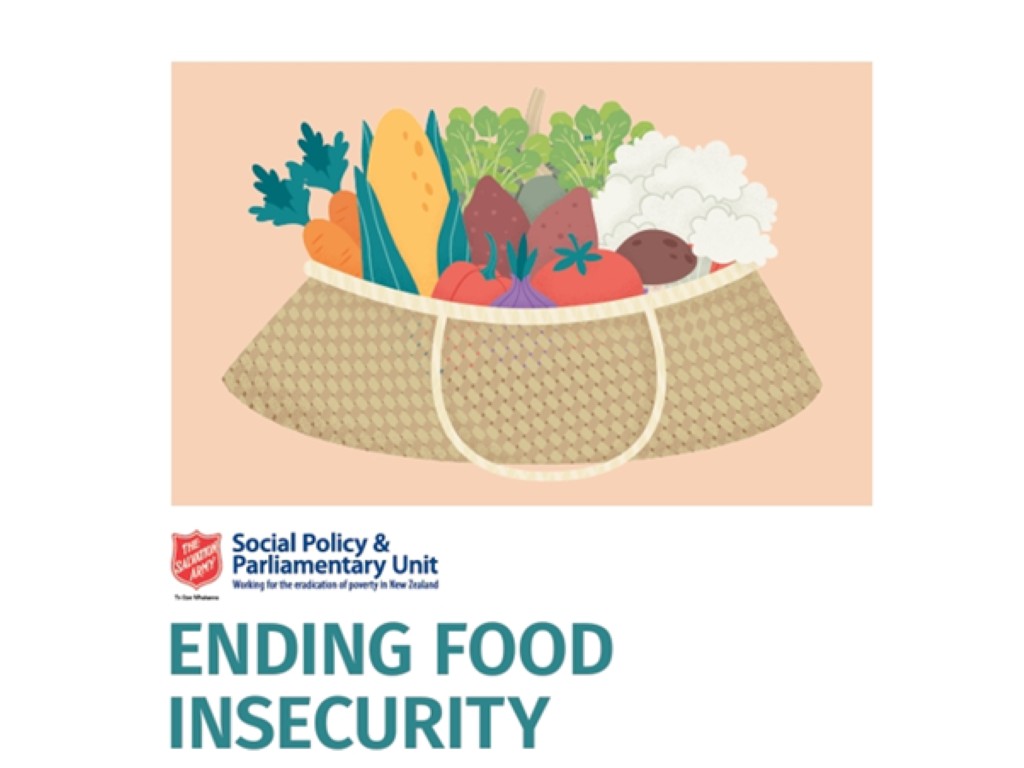
A new report from the Salvation Army’s Social Policy and Parliamentary Unit, titled Ending Food Insecurity, showed the rate of food insecurity among households with children almost doubled in the two years to June 2024.
Pacific children and tamariki Māori are the most affected. More than one in two Pacific children are experiencing food insecurity, the report stated. More than a third (35 per cent) of tamariki Māori are affected – two to three times the rate experienced by children of European (18 per cent) and Asian (12 per cent) ethnicities.
“Our nation exports enough food to feed 40 million people yet leaves more than a quarter of a million children going without sufficient food in this country. Action is needed now across all the dimensions of food security,” the Salvation Army report stated.
“The price of low-cost healthy food has increased at a rate twice that of incomes in recent years.
“A lack of competition in the grocery sector has been identified by the Commerce Commission as a contributor to this. But it is likely to take a decade or more for another large supermarket operator to become established in this country.”
The report proposed the creation of “thriving, mana-centred local food systems with alternative smaller models of grocery and food enterprises”, which “offers the chance for immediate improvement in supply and affordability of food”.
“Such enterprises exist already, and well-designed support through local and national food policy and funding could bring rapid change,” the report explained. “A new paradigm for our food system needs to be shaped ensuring that thriving local food systems exist together with the food export sector.”
The report added that food policy “needs to be informed by a fully rounded understanding of social investment that takes account of the benefits of longer-term health, educational and other socio-economic benefits in food policy decisions”.
More than a dozen actions were suggested in the report, including embedding free lunches in the school system, more funding for community initiatives and changing the title and purpose of the Grocery Commissioner to become a Food Commissioner.
FULL STORY
Ending Food Insecurity Report (The Salvation Army)

Ad

Ad
The latest from
CathNews


Newsletter Signup
Receive CathNews New Zealand updates in your email every Tuesday and Friday