

Seismic building rule change likely positive for churches

Chris Penk (New Zealand National Party)
Building and Construction Minister Chris Penk announced changes to the seismic strengthening regime introduced after the Canterbury and Kaikōura earthquakes.
The reforms – based on different interpretations of risk and critical weakness – will mean costly repairs or remediation for hundreds of buildings will be cheaper or not required at all, Radio New Zealand reported.
“While well intentioned, the current system for assessing and managing seismic risk in buildings places an overwhelming financial burden on building owners,” Mr Penk said.
“For many buildings, the price of strengthening runs from hundreds of thousands to several million dollars. As a result, these buildings are often left empty and become derelict, making them even more dangerous to bystanders in an earthquake.
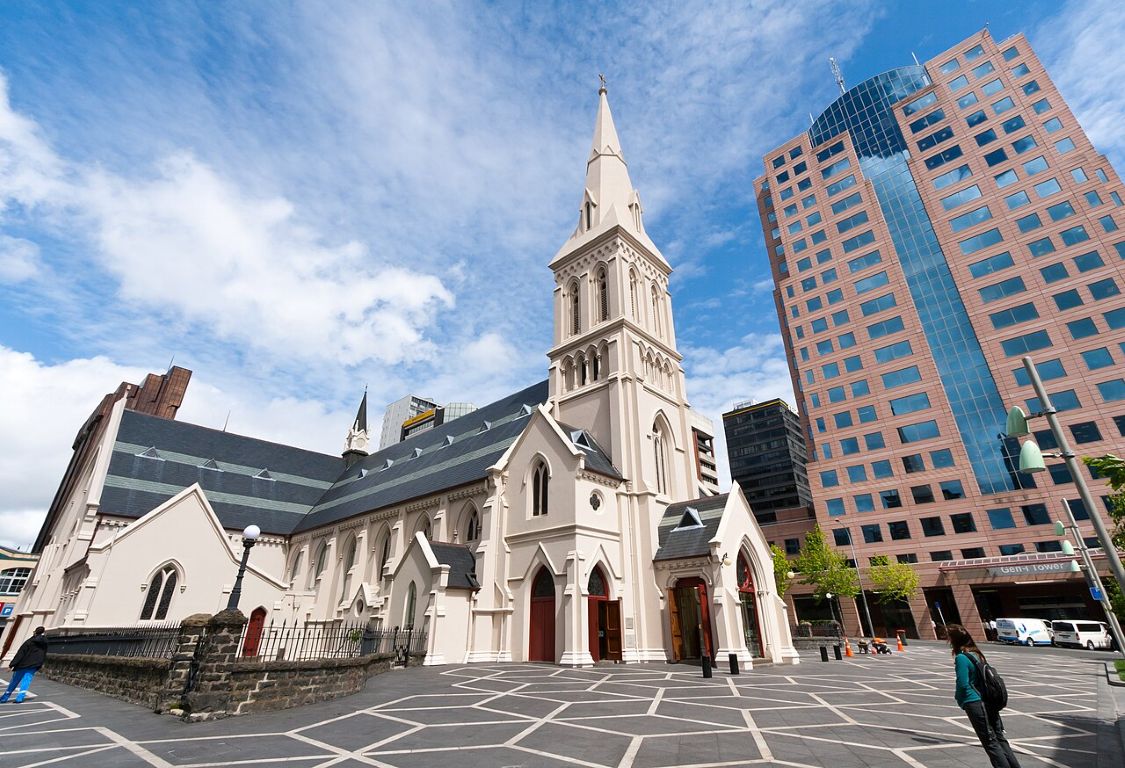
“Cities and regions are losing the businesses, churches, town halls and classrooms that are central to their local economies and community spirit.”
Mr Penk said local councils will have the authority to grant extensions to remediation deadlines of up to 15 years, giving building owners time to secure funding, plan and carry out any major work still required.
Even in quake-prone cities, mayors are keen to push out the building-strengthening deadline – some with a blanket approach, others on a case-by-case basis.
Nelson Mayor Dr Nick Smith was a civil engineer. The Government’s new approach, he said, “gives councils more flexibility and enables us to concentrate on those buildings that pose the greatest risk”.
“I do not think we would give a blanket 15-year extension. We would look at each case on its merits,” he said.
“Factors to be considered would be how many people and how regularly is the building occupied – if it is church occupied for two hours per week, it poses less risk to human life than a building that is, for instance, an early childhood centre or an English language centre that is occupied 40 hours or more a week.”
Under the new regime, unreinforced masonry buildings with unsecured facades and walls above public areas or neighbouring buildings will automatically be considered earthquake prone.
Concrete buildings with more than three storeys will be assessed for earthquake prone status under a “targeted retrofit methodology” to determine “critical vulnerabilities” that can lead to a collapse.
In smaller towns, with under 10,000 residents, unreinforced mansonry buildings under three storeys will not require remediation or warning notices, but owners still have to secure the facade before the building can be removed from the relevant register.
Auckland, along with Northland and the Chatham Islands, will be removed from the system entirely.
The Government expects the changes to remove about 2900 buildings from the register, make remediation cheaper for a further 1440 buildings and 880 would not need any remedial work. Only about 80 buildings would still require a full retrofit, due to the risks posed.
FULL STORY
Local elections: City leaders promise 15-year respite on quake-prone buildings (By Fox Meyer/Newsroom)
Earthquake-prone building system refocused (Beehive)
Mediawatch: Quake-prone shake-up celebrated – but devil is in the detail (Radio New Zealand)
What building owners think about the earthquake law change (Radio New Zealand)

Ad

Ad
The latest from
CathNews

Newsletter Signup
Receive CathNews New Zealand updates in your email every Tuesday and Friday