

NZ bioethicist rejects simplistic arguments about equality
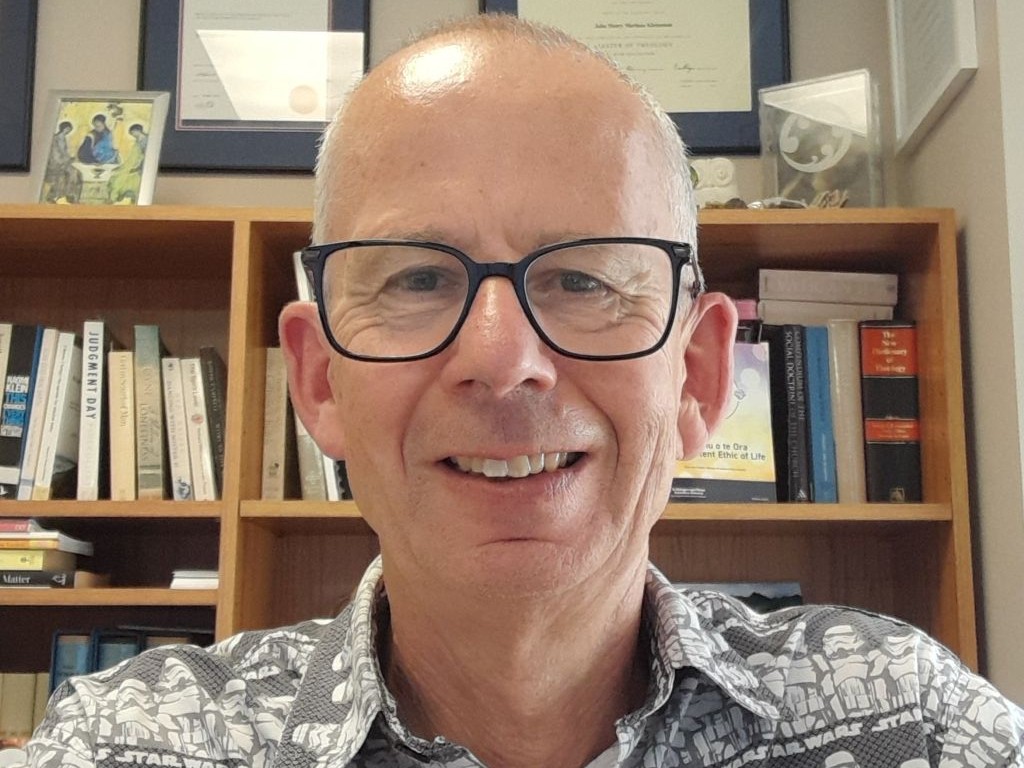
Dr John Kleinsman
In an editorial in the November 2025 issue of The Nathaniel Report, Dr John Kleinsman called out the increasingly common practice of demagoguery – treating “complex issues as if they result from one, simple cause that can be solved by one, simple cure”.
A current example of this in Aotearoa New Zealand is the assertion that “we are all born equal and we should never be treated differently by the law”.
Dr Kleinsman, who is kaitohu/director of Te Kupenga – Nathaniel Centre for Bioethics, wrote that this notion “was to the fore recently in debates about the merits of special Māori wards for local body councils“.
As a counter to the simplistic slogans prevalent in debates on such issues, Dr Kleinsman spelled out a nuanced Catholic approach that recognises the intrinsic dignity of the person while recognising that people are always part of, and subject to, societal structures.
The editorial drew on the 2023 teaching document issued by the New Zealand bishops titled Te Kahu o te Ora – a Consistent Ethic of Life, in which the bishops reinforce the inestimable and innate dignity of every human person, endowed by God, from which all other rights and responsibilities flow.
But while this principle is the moral stepping-off point, human sacredness and dignity are also endowed “in and through the lived experience of our physical relationships . . . the tapu we enjoy because we are embodied social beings”.
“In other words, intrinsic dignity and equality have a social dimension,” Dr Kleinsman wrote.
“This insight is so critical to Catholic social teaching that it is embodied in another key principle of Catholic social justice – the preferential option for the poor and vulnerable.
“For Catholics, therefore, there is no inherent contradiction between maintaining belief in the ‘equality’ of all while, simultaneously, adopting policies and laws that give ‘preference’ to some in the name of establishing equality – that is, as a ‘means’ to furthering the equality that belongs to all,” Dr Kleinsman argued.
Māori, as an ethnic group, are overwhelmingly worse off according to a range of measures, and key to overcoming these disparities is to ensure that the voices of the marginalised are present at the tables where policy decisions are made, Dr Kleinsman added.
“As we reflect on the social and structural causes of societal inequality, we must both recognise and call out the over simplistic, emotive and divisive rhetoric of demagoguery,” he wrote.
“Equally, we must strive to implement structures that will meaningfully address poverty with its many different faces, including the introduction of ‘preference’, where necessary, as a means to bringing about equality in real life.”
FULL STORY
Nathaniel Report Editorial issue 77 (By Dr John Kleinsman/Te Kupenga – Nathaniel Centre for Bioethics)

Ad

Ad
The latest from
CathNews


Newsletter Signup
Receive CathNews New Zealand updates in your email every Tuesday and Friday