

Committee calls for process to recognise Treaty ‘fourth article’
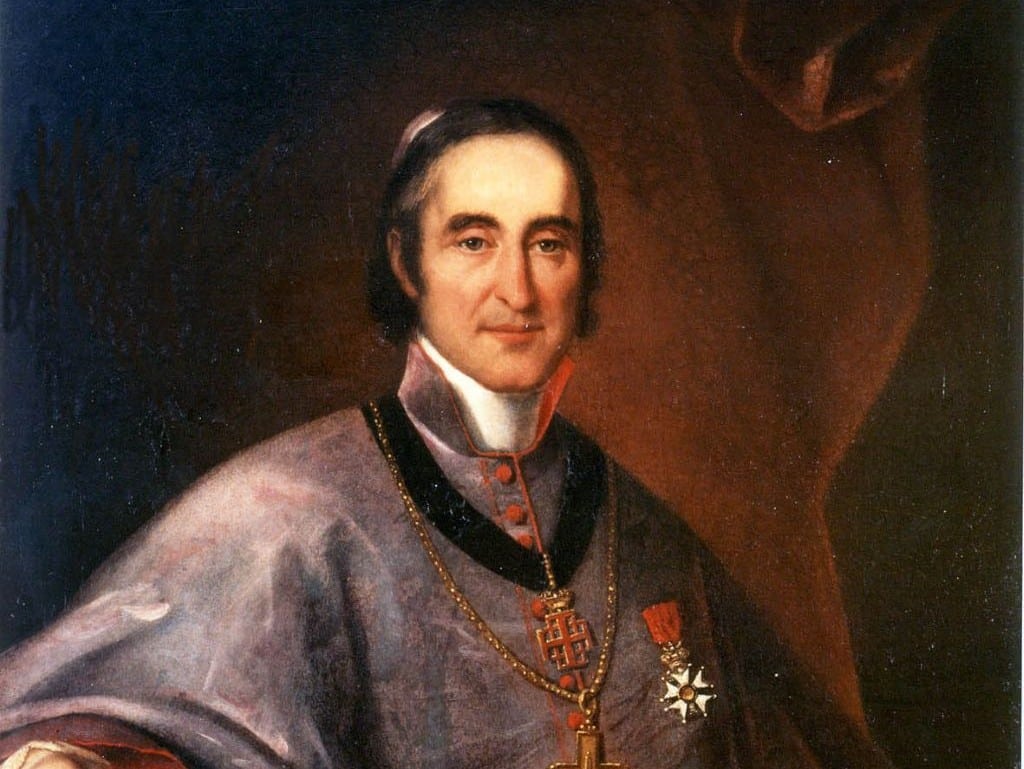
Bishop Jean Baptiste Pompallier (Pompallier Hokianga Trust)
The committee recently released its report on a petition lodged by farmer, theologian and historian Alistair Reese to have the declaration formally recognised by the Government as a fourth article of Te Tiriti o Waitangi alongside the three articles written into the Treaty.
The committee also noted that there are existing protections for religious freedom and acknowledged the complexities of legislating such recognition.
The fourth article reportedly came about after Bishop Jean Baptiste Pompallier raised concerns with Governor William Hobson at Waitangi in February 1840, about whether Catholics (and by implication other faiths) would be “free” under the proposed Treaty.
Governor Hobson agreed after conferring with the missionary Henry Williams. A short statement was written later that day in te reo Māori, though not included in the official text of Te Tiriti.
In English it read: “The governor says the several faiths of England, of the Wesleyans, of Rome, and also Māori custom shall be alike protected by him.”
The petition about the fourth article received 503 signatures and was initiated by the late Ngāti Ranginui kaumātua Patrick Nicholas and Huikākahu Kawe, whose work Alistair Reese continues.
In its February 2026 report, the Petitions Committee acknowledged the oral agreement was not included in the written text of Te Tiriti and that there is “no written record of it being discussed at Treaty signings other than at Waitangi on 6 February 1840”. At the same time, it agreed that this absence alone was not reason to overlook it.
Rather than endorse immediate legislation, the committee recommended that a policy process be initiated that considers ways in which the oral agreement at Waitangi could be formally recognised. It encouraged the use of “deliberative democracy” – such as citizens’ assemblies, structured public wānanga or a broader constitutional review process – to enable informed, inclusive national discussion before deciding whether and how to formally recognise the oral agreement.
While some describe the “fourth article” as a guarantee of “religious freedom”, Mr Reese said that is too narrow. His fundamental question is whether Governor Hobson committed the Crown to “active protection of the fledgling nation’s wairuatanga (spirituality)”.
Constitutional expert Geoffrey Palmer told the committee any change regarding the “fourth article” would require “deep analysis, development of policy options, interdepartmental consultation and consultation with Māori”.
Historian Professor Paul Moon did not dispute that a statement was read out at Waitangi but objects to elevating it to the status of a Treaty article. He says most signatories were not present to hear it, that there is no evidence it was repeated at other signings and that it does not appear in early oral histories about the Treaty.
FULL STORY
What is the ‘fourth article’ of te Tiriti and why is it being debated? (By Liam Rātana/The Spinoff)

Ad

Ad
The latest from
CathNews


Newsletter Signup
Receive CathNews New Zealand updates in your email every Tuesday and Friday