

Diocesan body opposes making English an official language

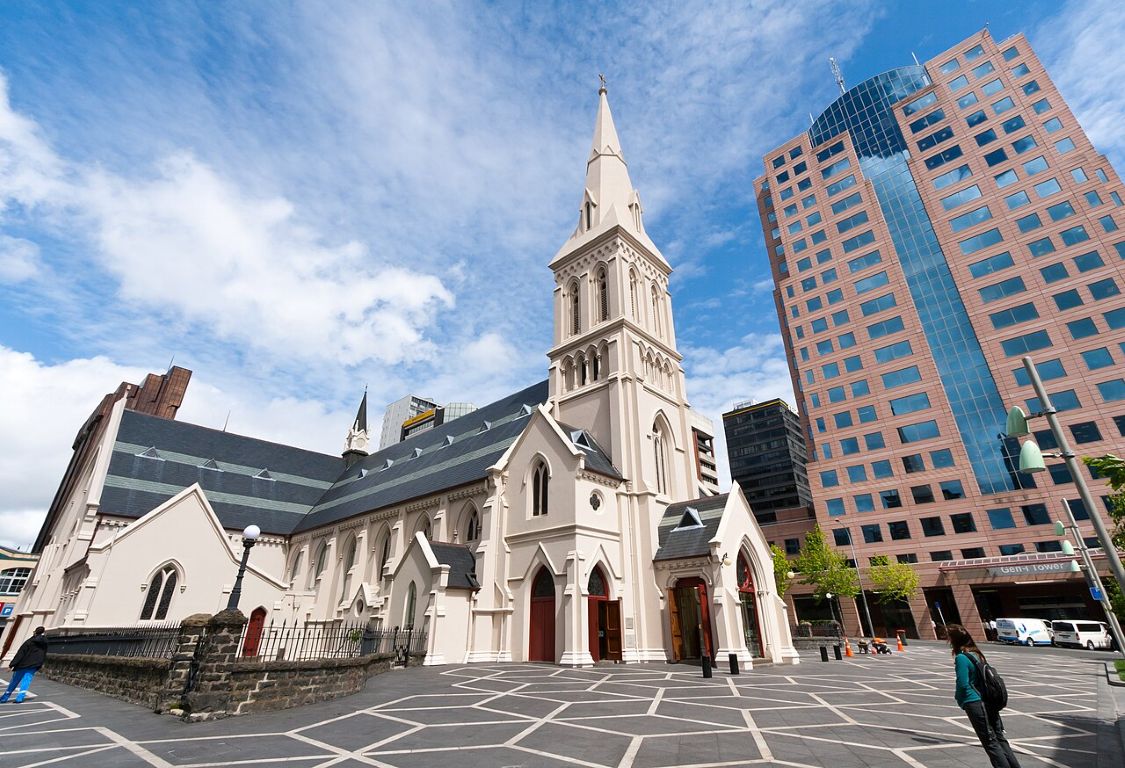
(Russell Street/ Wikimedia Commons)
The commission stated its concerns about the English Language Bill in a submission to Parliament’s Justice Committee. It feared the protections of the nation’s native indigenous language, the taonga status and Te Tiriti o Waitangi obligations of te reo Māori “will be jeopardised by this ill-proposed and unnecessary Bill”.
“This Bill does not seek to protect and uphold a language that is endangered, as English is not under threat”, the submission said, but if passed into law it would “weaken the vulnerable taonga of te reo Māori”.
“English already dominates government, health, education, media and public life. Elevating it further does not advance the common good. Instead, it risks disadvantaging the language that most needs support for equitable flourishing.”
The submission rejected the claim that te reo Māori causes “confusion” as such a claim “risks framing Māori identity as problematic”, which is not consistent with Catholic Social Teaching.
“Nor do we believe that the use of te reo Māori in public services has caused or is causing undue confusion, particularly in health and transport contexts as English translation has always been a provided subtext,” the submission stated.
Policies affecting Māori language should be shaped with Māori, not imposed through political bargaining, the submission added, noting that Catholic Social Teaching obliges the Church to advocate for the flourishing and future of te reo Māori.
The submission cited Waitangi Tribunal findings and a Court of Appeal ruling in support of the Crown’s obligations towards te reo Māori.
Catholic Social Teachings on human dignity, the common good, solidarity and subsidiarity were also cited.
“This Bill seems to form part of a wider political climate reducing Māori visibility in public life,” the submission added. “We push against this shift as it contradicts the Church’s commitment to Te Tiriti o Waitangi as a covenant requiring protection of Māori taonga.
“Declaring English an official language adds nothing necessary to the Constitution of Aotearoa New Zealand but risks actual and symbolic harm to te reo Māori, and to the nation’s foundational bicultural and bi-linguistic identity. Our faithfulness to the Gospel and to Te Tiriti principles directs us to reject this Bill and continue the work of strengthening te reo Māori for the flourishing and common good of all.”
The Māori Language Act 1987 made te reo Māori an official language of Aotearoa New Zealand.
FULL STORY
JPC submission on English Language Bill (Auckland Diocese Justice and Peace Commission)
English Language Bill (Legislation NZ)

Ad

Ad
The latest from
CathNews


Newsletter Signup
Receive CathNews New Zealand updates in your email every Tuesday and Friday