

Encyclical defends humanity in AI age: Nuncio
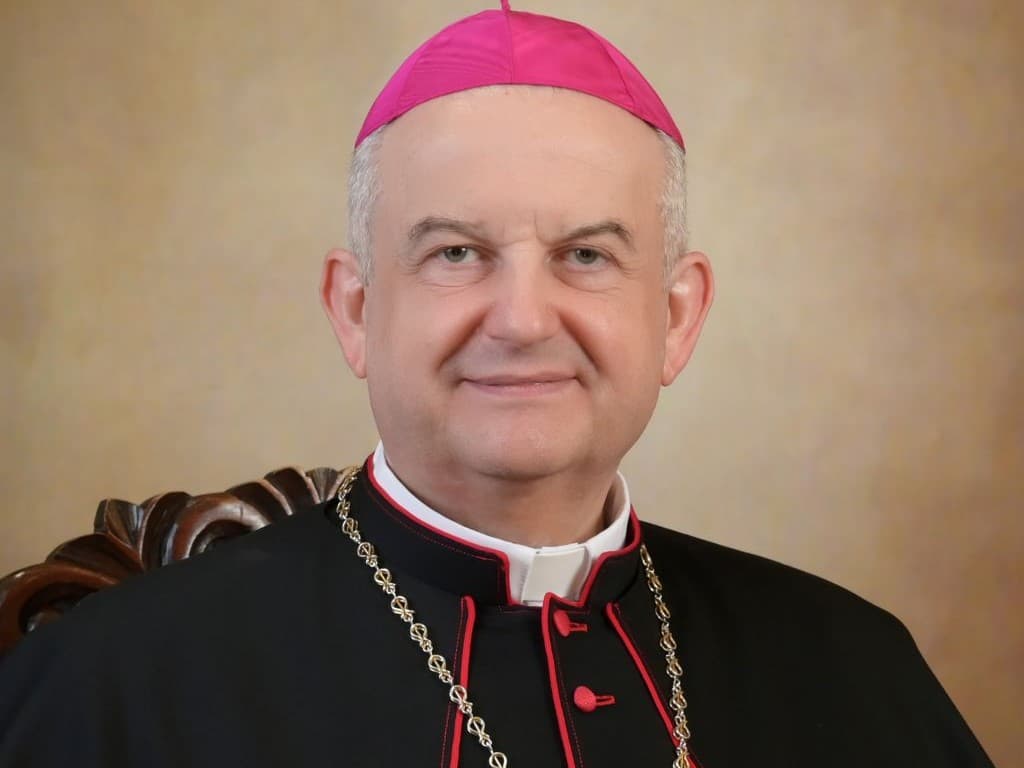
Archbishop Gábor Pintér (NZCBC)
Reflecting on the encyclical, which was released on May 25, Archbishop Gábor Pintér said that “in the age of artificial intelligence – when immense concentrations of technological power beyond all control, along with new forms of dehumanisation, are already threatening human dignity – the Holy Father calls us to the ‘urgent duty’ of remaining deeply human”.
In an era of polarisation and violence, when the “culture of power” is spreading and war is once again becoming accepted as an instrument of international politics, the Pope urges the world to develop technology “without allowing our hearts to lag behind”, the Archbishop said.
The Pope invites society to accept the limits and fragility of humanity without regarding them – as technocratic ideology does – as defects to be corrected, the Archbishop continued.
“He urges us not to look at the world from the perspective of the powerful, but from below, through the eyes of those who suffer, beginning with the least among us,” the Nuncio wrote. “Through the eyes of a God who took upon himself our weakness and transformed it into a place of salvation, because even when machines excel in efficiency, at the centre of history there still stands a human face waiting to be seen.”
Archbishop Pintér said Magnifica Humanitas is not primarily an analytical text about artificial intelligence, nor does it dwell on the details of constantly evolving processes. Rather, it is a “synthetic document” that applies the principles of Catholic social teaching to our age – the age of artificial intelligence – while reaffirming and updating the fundamental points of the Church’s magisterium.
The text also dispels misunderstandings among those who, trusting in the absolute freedom of markets and new technologies, tend to dismiss papal teachings advocating the shared and humane governance of AI, integral ecology, new economic structures and the rejection of war as debatable opinions, the Archbishop added.
Archbishop Pintér noted that preserving humanity, governing processes and preventing monopolies – even in this field of AI – that ultimately increase the power of a few at the expense of the lives of many, the path indicated by the Pope does not erect barricades, nor does it reject the use of artificial intelligence outright.
On the contrary, it highlights its many positive aspects and useful applications, while also explaining that it is not enough merely to ask ethical questions about whether its use serves good or bad purposes.
FULL STORY
Remaining human in the age of algorithms (by Archbishop Gábor Pintér/NZCBC)

Ad

Ad
The latest from
CathNews

Newsletter Signup
Receive CathNews New Zealand updates in your email every Tuesday and Friday